Posts

Showing posts with the label online Interior decoration course

Achieving Comfort: Practical Tips for Maintaining Good Posture While Reading, Writing, and Watching

Image
    In the realm of health and wellness, ergonomics plays a crucial role in ensuring our daily activities are performed with minimal strain on our bodies. In this installment, we'll delve into the significance of maintaining proper posture while engaging in activities like reading, writing, and watching, shedding light on practical tips to alleviate discomfort and enhance productivity. Reading is a fundamental activity that we engage in daily, yet it often leads to discomfort if not done with proper posture and ergonomics in mind. Whether you're flipping through a physical book or scrolling on a digital device, your posture matters greatly. Sit on a chair with your back pressed against the backrest, ensuring it's parallel to the chair's back. Maintain an upright position with your knees bent at a 90-degree angle, using a footrest if necessary. Align your neck, shoulders, and hips in a straight line and position the reading material at eye level to prevent strain. If...

Healthy Living the Importance of Ergonomics

Image
  You're probably familiar with the four pillars of good health: proper diet, exercise, rest, and a positive attitude. In today's modern lifestyle, another crucial pillar has emerged: maintaining proper posture. Men, women, and children alike are experiencing significant health issues due to poor posture. Posture isn't just important while studying or using a laptop; it should be considered in all daily activities. To address this, I'm launching a new series called Ergonomics. Ergonomics focuses on studying furniture and equipment to enable more efficient and comfortable work. In this blog, I'll start with the basics that everyone uses.   Bed We spend approximately one-third of our life sleeping, so it's essential to have the right bed setup. The bed should be between 16-25 inches high (top of mattress) from the ground, depending on the user's height. When sitting, the legs should firmly touch the ground. Side tables should ideal...

Part 2-The Proportion Puzzle: Cracking the Code for Stunning Interiors

Image
In this follow-up installment of our series on " Principles and Elements of Designing ," we delve into the crucial aspects of proportion and scale, shedding light on their significance in creating harmonious living and working spaces. As we've previously discussed the principles of balance , rhythm , harmony , and emphasis , let's now explore how proportion and scale play pivotal roles in achieving a well-designed interior.   Proportion refers to the relationship between various objects within a space and their surroundings. It's about ensuring that each element not only complements one another but also fits cohesively into the overall composition. For instance, when selecting a coffee table for a sofa, it's advisable to choose one that is approximately two-thirds the length of the sofa itself. This ensures that the proportions remain balanced and visually appealing. Similarly, artwork hung behind the sofa should ideally occupy two-thirds of its w...

Part 1-Interior Design Fixes Addressing Common Home and Office Issues

Image
Welcome back to our series focusing on the Principles and Elements of Designing . In this instalment, we delve into the crucial aspects of "Proportion and Scale" in interior design – a fundamental principle that can make or break the aesthetics of your space. After exploring principles like balance , rhythm , harmony , and emphasis , we now turn our attention to the often overlooked but equally important principle of Proportion and Scale . When you step into a room, do you sense that something is amiss? That feeling might be attributed to the subtleties of proportion and scale in the design. In interior design , proportion and scale refer to the relationships between objects or between objects and the user. Understanding this relationship is pivotal for creating harmonious and visually pleasing spaces. Scale: Balancing Objects and Spaces Scale , in design, generally denotes the relationship between two objects. This is particularly crucial when the size of ...

Transform Your Room with a Single Focus

Image
Continuing our exploration of " Principles and Elements of Designing ," let's delve into the fourth principle: emphasis. We'll examine how it distinguishes itself from balance , rhythm , and harmony . In emphasis, the primary aim is to direct the viewer's attention towards a specific element. This could be a word, a sentence, an image, a link, a button, or, in the realm of interior design, a particular feature. An element that captures attention and stands out from the rest of the design is referred to as emphasis or a focal point. Why is emphasis significant? Failing to seize the viewer's attention at first glance can make it challenging to do so later on. Emphasis is what initially captures attention, guiding the eye gradually through the rest of the design. How can you establish a focal point in a room? Let's explore. There are two primary methods: Structural elements: Occasionally, architectural or structural components can be util...

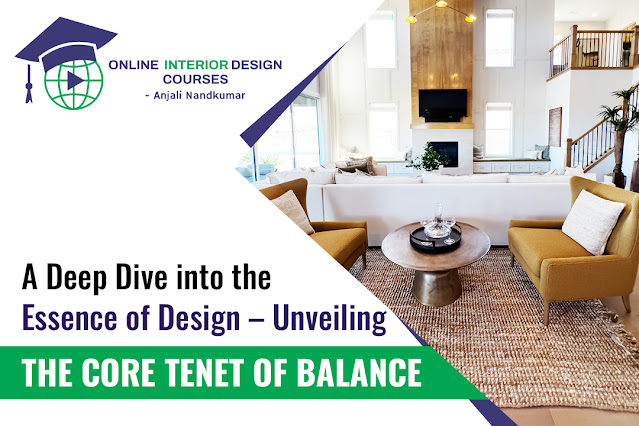
A Deep Dive into the Essence of Design – Unveiling the Core Tenet of Balance

Image
  Upon entering a room, some spaces immediately draw you in with their charm, while others seem haphazardly arranged. Ever wondered about the root cause of this discrepancy? The key lies in achieving a delicate equilibrium in design. In the realm of interior design, attaining visual harmony takes precedence. This inaugural blog in our series, "Foundations of Design: Principles and Elements ," embarks on an exploration of the fundamental aspects that contribute to the creation of well-balanced and aesthetically pleasing spaces. The primary focus of our scrutiny is the concept of 'Balance. BALANCE Balance is the linchpin of success in various aspects of life, whether it's work, personal relationships, or the visual appeal of your living space. In the context of interior design, we delve into the idea of visual balance, where objects within a space coexist harmoniously, each carrying equal weight and significance. Neglecting this balance can result in the vie...

Discover the Art of Interior Design and Decoration online

Image
  Are you passionate about transforming spaces and creating visually stunning interiors? Interior Design and Decoration is not just about arranging furniture; it's an art that involves a careful blend of colours, lighting, and accessories to craft spaces that are both functional and aesthetically pleasing. Whether you're looking to spruce up your home or embark on a career in this creative field, understanding the fundamentals is essential. Dive into the world of Interior Design and Decoration to explore how you can breathe life into every room. When it comes to interior spaces, the finishing touches make all the difference. Interior Decoration is the art of selecting the right fabrics, accessories, and decorative elements to elevate a space's overall aesthetics. It's about creating an atmosphere that mirrors the personality and style of its inhabitants. Discover the art of adding the perfect finishing touches to your interiors with the nuances of Interior Decora...

Crafting Design Brilliance: Unveiling the Essence - Part 2 of Principles and Elements

Image
In our exploration of the world of design, let's delve deeper into the " Principles and Elements of Interior Design " in this article by Anjali Nandkumar . This part focuses on the sixth crucial principle following Balance, Rhythm, Harmony, Emphasis, Proportion, and Scale. Form: Combining Art and Function Continuing from the last article, where we emphasised how function should guide form, let's pose a question: Should the form, or the visual aspect, be less important in interior design? When making design choices, it's crucial to determine if you are acquiring something that's more like a piece of art or something that's functional. Functional pieces have a purpose, but they can also look good, blurring the lines between being useful and aesthetically pleasing. Art pieces, on the other hand, exist solely to look good and bring joy. For example, consider a painting on a wall in a room. It's there to enhance the visual appeal and make the room...