Posts

Showing posts with the label architect and interior designer Anjali Nandkumar

Transform Your Kitchen with Ergonomics: Essential Layout and Design Tips

Image
In our ongoing exploration of health and wellness through ergonomics, today we delve into the ergonomics of the kitchen, a vital aspect of home design. The previous discussions highlighted the dangers of neglecting ergonomic principles, maintaining proper posture while reading, writing, and watching, best practices to enhance work efficiency, and the ergonomics of pushing versus pulling loads. Now, we turn to the kitchen, the heart of the home, which serves as a cooking, storage, dining, and sometimes a family room. Despite its central role, many find themselves exhausted after working in the kitchen, often due to unnecessary movement or prolonged standing. This exhaustion can be mitigated by adhering to ergonomic guidelines designed to minimize stress and make cooking a more enjoyable activity. The Ergonomic Kitchen: An Overview An ergonomic kitchen is designed to optimize workflow and reduce physical strain by organizing the space according to the principles of the "kitc...

Ergonomics and Anthropometry: Essential Insights for Everyday Health

Image
In our continuing series on health and wellness, we focus on ergonomics, a vital component of maintaining good health through proper posture and movement. This series previously discussed the foundational importance of ergonomics for overall health and provided insights into maintaining good posture while reading, writing, and watching. Ergonomics extends beyond the confines of a study table or chair; it should be integrated into every aspect of daily life. Success in daily activities hinges on how we sit, stand, walk, lift, or pull objects, and these actions are crucial for maintaining good health. Understanding Ergonomics: Pushing vs. Pulling When it comes to carrying loads, the choice between pushing and pulling can significantly impact your body. Pushing a load is generally less stressful on the body because it utilizes your body weight and allows you to maintain a more neutral posture. This method also provides better visibility of the load, helping you avoid potential obstacles. ...

Part 2-The Proportion Puzzle: Cracking the Code for Stunning Interiors

Image
In this follow-up installment of our series on " Principles and Elements of Designing ," we delve into the crucial aspects of proportion and scale, shedding light on their significance in creating harmonious living and working spaces. As we've previously discussed the principles of balance , rhythm , harmony , and emphasis , let's now explore how proportion and scale play pivotal roles in achieving a well-designed interior.   Proportion refers to the relationship between various objects within a space and their surroundings. It's about ensuring that each element not only complements one another but also fits cohesively into the overall composition. For instance, when selecting a coffee table for a sofa, it's advisable to choose one that is approximately two-thirds the length of the sofa itself. This ensures that the proportions remain balanced and visually appealing. Similarly, artwork hung behind the sofa should ideally occupy two-thirds of its w...

Part 1-Interior Design Fixes Addressing Common Home and Office Issues

Image
Welcome back to our series focusing on the Principles and Elements of Designing . In this instalment, we delve into the crucial aspects of "Proportion and Scale" in interior design – a fundamental principle that can make or break the aesthetics of your space. After exploring principles like balance , rhythm , harmony , and emphasis , we now turn our attention to the often overlooked but equally important principle of Proportion and Scale . When you step into a room, do you sense that something is amiss? That feeling might be attributed to the subtleties of proportion and scale in the design. In interior design , proportion and scale refer to the relationships between objects or between objects and the user. Understanding this relationship is pivotal for creating harmonious and visually pleasing spaces. Scale: Balancing Objects and Spaces Scale , in design, generally denotes the relationship between two objects. This is particularly crucial when the size of ...

Transform Your Room with a Single Focus

Image
Continuing our exploration of " Principles and Elements of Designing ," let's delve into the fourth principle: emphasis. We'll examine how it distinguishes itself from balance , rhythm , and harmony . In emphasis, the primary aim is to direct the viewer's attention towards a specific element. This could be a word, a sentence, an image, a link, a button, or, in the realm of interior design, a particular feature. An element that captures attention and stands out from the rest of the design is referred to as emphasis or a focal point. Why is emphasis significant? Failing to seize the viewer's attention at first glance can make it challenging to do so later on. Emphasis is what initially captures attention, guiding the eye gradually through the rest of the design. How can you establish a focal point in a room? Let's explore. There are two primary methods: Structural elements: Occasionally, architectural or structural components can be util...

Harmonizing Spaces Elevate Your Home/Office with the Rhythms of Design

Image
  Continuing our journey through the Principles and Elements of Designing , we transition from the concept of balance to the captivating principle of rhythm . Much like its musical counterpart, rhythm in design possesses a profound essence, bringing life and vibrancy to spaces. In the context of design, rhythm unfolds through the repetition of elements, forming a visual cadence that reverberates throughout a room. The intervals between these recurring elements contribute to an overall sense of rhythm, guiding the viewer's gaze effortlessly from one object to the next Rhythm can be classified into three types as follows, 1. Regular Rhythm or Repetition True to its name, regular rhythm takes shape through consistent repetition of elements such as light, color, pattern, texture, form, proportion, and scale. In the showcased kitchen setting, pendant lights and stools exhibit a perfect illustration of regular rhythm. Positioned at regular intervals, these elements create a v...

Achieving Harmonious Spaces Unveiling the Secrets of Interior Design Balance

Image
  Upon entering a room, some spaces emanate warmth and harmony, while others appear cluttered and chaotic. Have you ever pondered why? The answer lies in the delicate balance of design . In this article, we delve into the principles and elements of interior design , focusing on achieving visual balance to restore harmony in your home or office . The Importance of Balance Balance is a fundamental aspect not only in work, personal life, and relationships but also in interior design. In the realm of design, we underscore visual balance, ensuring that every object contributes equally to the overall aesthetic. Failure to achieve balance may lead the viewer's attention to fixate on one element, neglecting the rest of the space. Principle of Balance in Interior Design In the vast landscape of interior design , balance takes shape in three distinct forms: Symmetrical Balance or Formal Balance Symmetry, marked by an imaginary central line dividing objects, imparts a formal an...

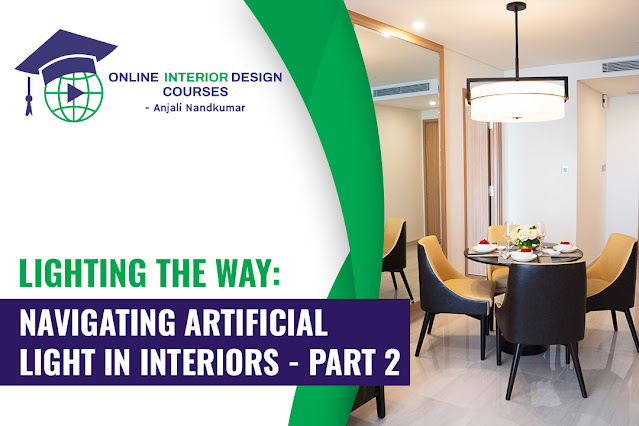
Lighting the Way: Navigating Artificial Light in Interiors - Part 2

Image
    Welcome back to our exploration of the fascinating world of online interior designing course in lighting! In this blog, we'll shine a light on artificial illumination , a vital aspect of creating ambience and functionality in any space. So, let's dive into the realm of artificial light and discover how it transforms our surroundings. Understanding Artificial Light: Artificial light , in simple terms, is light created by humans. It encompasses various sources such as candlelight, firelight, gaslight, and, particularly in this discussion, electric light. Here, we'll focus on the magical world of electrical lighting and its transformative role in interior spaces. Why Artificial Light Matters: Artificial light steps in when natural light takes a bow. There are instances when we need more light than what the sun offers, or we aim to craft specific moods within a space. This is where artificial light becomes a design superhero. Artificial light is a versatile...